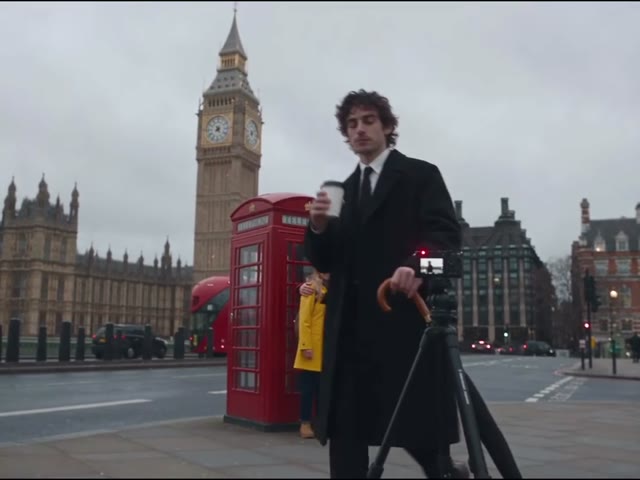
GTA Goodbye AI trend and shot breakdown
A farewell short uses a familiar place, a small gesture and a last look. A poster reveal uses the same idea of visual continuity, holding the pose while the world around the portrait changes.
Why the edit feels like a goodbye
Start wide enough to place the viewer. Cut closer for something personal, such as a hand clasp or a glance in the mirror. Give the last shot enough time to register. A figure receding into the distance can carry the ending without a caption.
The six edits beat by beat
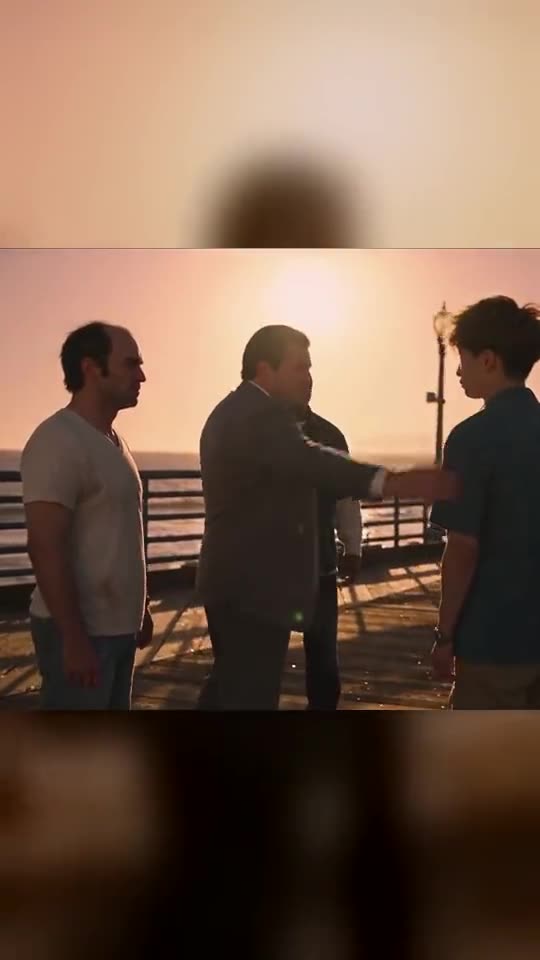
Goodbye on the Pier — Meet the crew at sunset, shake hands, look back and leave.
| Time | Shot direction |
|---|---|
| 0–4s | Open on a sunset pier. The adult lead approaches three original adult friends beside the railing. Hold a wide four-person composition as one friend steps up to greet the lead. |
| 4–7s | Cut to a medium side view by the pier parking area. The lead and one friend share one brief handshake, then release. A parked, unbranded coupe sits behind them. |
| 7–10s | Cut tight on the lead's face. Let their expression settle from a fleeting smile to a quiet goodbye. |
| 10–13.5s | Cut inside the parked coupe. The lead settles into the driver's seat and brings a hand up to the wheel. |
| 13.5–15s | Cut to the friends from behind, facing the road. The same coupe leaves the frame in the distance. |
Suggested audio for generation. Carry gentle pier wind and lapping water into the handshake. Let seat fabric and a quiet engine idle enter only in the cabin. Finish with a soft original ambient tone.
Time Flies — Two visits to the same pier, years apart, tied together by one gesture.
| Time | Shot direction |
|---|---|
| 0–3s | In clear daylight on a pier, show a younger adult version of the lead approaching their three adult friends. Alternate the rear wide shot with each friend's reaction. |
| 3–6s | Show the lead trading a single fist bump with the nearest friend in close-up, then cut back to the group's faces. Establish the exact angle for the repeated gesture. |
| 6–9s | Match cut to sunset years later on the same pier. The lead is visibly older, with the same face shape, eyes and hairline. Repeat the fist bump in the same position and framing. |
| 9–11.5s | Give the older lead a close-up. One friend places a hand on their shoulder while another waits in the background. |
| 11.5–15s | Cut wide for a brief hug and close again on the lead's reaction. Hold the final embrace against the sunset. |
Suggested audio for generation. Use a light pier ambience across both visits. Match a quiet sleeve sound on the two fist bumps and carry an original sustained chord through the time cut.
The Last Drive — A rearview mirror, friends alongside, and one more drive together.
| Time | Shot direction |
|---|---|
| 0–3.5s | From inside a vintage, unbranded convertible, frame the lead's eyes in the rearview mirror. They adjust the mirror once and look forward. |
| 3.5–5s | Cut outward to a coast road and briefly follow a friend riding ahead. Keep the direction of travel consistent with the cabin. |
| 5–8.5s | Track beside the convertible to see the lead's driving profile. A friend draws alongside in a second car and the lead glances over for a moment at cruising speed. |
| 8.5–11s | Return to a windshield view as the road opens into golden light. Keep the same vehicle and wardrobe as in the mirror shot. |
| 11–14s | Cut to a steady follow shot behind the second car. The two cars continue down the empty road. |
| 14–15s | Cut back to the lead for a small, unguarded grin. |
Suggested audio for generation. Build a quiet road and tire sound bed. Keep a steady engine note between interior and exterior shots, then lift in a brief, original instrumental cue under the final smile.
Solo Loading-Screen Portrait — A single mirror portrait becomes a hand-painted coastal character card.
| Time | Shot direction |
|---|---|
| 0–2.5s | Start on a casual indoor mirror portrait of the uploaded adult. Keep their upper body, expression and phone visible. Hold the composition nearly still. |
| 2.5–4s | Reveal the painted version from the bottom. The phone and clothing line up with the photo while the lower background becomes a waterfront boulevard. |
| 4–5.5s | The same upward wipe reaches the face and then the skyline, preserving the lead's pose, gaze and facial proportions as the photo becomes a painted portrait. |
| 5.5–8s | Hold the completed solo portrait against a pink-violet dusk skyline, with a small drift in only the distant background. |
Suggested audio for generation. Quiet indoor tone until the wipe, a soft original transition sweep, then low city air and a short synth chord.
Red Car Loading Screen — A cabin selfie reveals a red coupe and a neon street behind the same person.
| Time | Shot direction |
|---|---|
| 0–2.5s | Open on an angled selfie of the lead seated inside a car, one hand near their temple. Keep the visible face, outfit and hand position stable. |
| 2.5–4s | As the bottom edge switches to illustration, show the red door line of an original coupe first. Let the painted sleeve and raised hand emerge in the same silhouette as the photo. |
| 4–5.5s | Complete the wipe across the lead's face and the cabin roof. The former dark interior gives way to a bright coastal street with palms and glowing art-deco shapes. |
| 5.5–8s | Hold the lead and the red coupe in a finished three-quarter composition. Keep the face crisp and the vehicle clearly readable. |
Suggested audio for generation. Start with soft cabin ambience. During the wipe add a subtle airy sweep that tracks the rising edge. End with distant street ambience.
Couple Loading Screen — Two people keep their sides and pose as a shared portrait becomes city artwork.
| Time | Shot direction |
|---|---|
| 0–2.5s | Place the two adults side by side in a mirror portrait, reference image 1 on screen-left and reference image 2 on screen-right. The left adult holds a phone in front of their torso. Both faces are visible. |
| 2.5–4s | The rising matte first reveals their two painted outfits and the street below. Keep both silhouettes aligned with the live-action shoulders and preserve the gap between them. |
| 4–5.5s | Carry the wipe evenly over both faces and the room above them, revealing a waterfront skyline. Each person keeps their own features, clothes and position. |
| 5.5–8s | Hold the finished two-person composition. Frame both faces at a similar size against the pink harbor sky. |
Suggested audio for generation. Low room tone at the start, a single soft paper sweep as both portraits change together, then a quiet original ambient chord under the final frame.
Choose the edit for your photo
- A close, expressive portrait gives Goodbye on the Pier a readable reaction and gives Time Flies a face to carry across the match cut.
- A clear head-and-shoulders portrait leaves room for the rearview mirror framing in The Last Drive.
- An outfit with a clean silhouette works well for the poster scenes. Couple Loading Screen pairs two distinct silhouettes in the same frame.
Try the GTA Goodbye maker or use the step-by-step tutorial and prompts.
Make the GTA Goodbye video with 1–2 photos
8 / 15-second 9:16 video with its own sound, from 100 credits. No prompt needed.
Open the GTA Goodbye generatorFAQ
What makes a match cut read as a jump in time?
Keep the subject, framing and object position steady across the cut. Changes in age and light then register immediately.
What makes a poster wipe work?
A single sweep across two aligned portraits keeps the face easy to follow while revealing the hand-painted style.
Do the reference videos have sound?
The reference player includes the source clips’ audio. Generation uses a silent copy for motion and creates new sound from each scene prompt.